15 Fascinating Facts about Weasels
Do you want to learn about the small but mighty weasel that lives right here in the Pennsylvania wilds? This region is home to three species of weasel: the long-tailed weasel (Neogale frenata), the short-tailed weasel (Mustela erminea), also known as ermine or stoat, and the least weasel (Mustela nivalis). Don’t let the weasel’s size fool you; these small mammals are a big deal. Read on for 15 Fascinating Facts about Weasels!
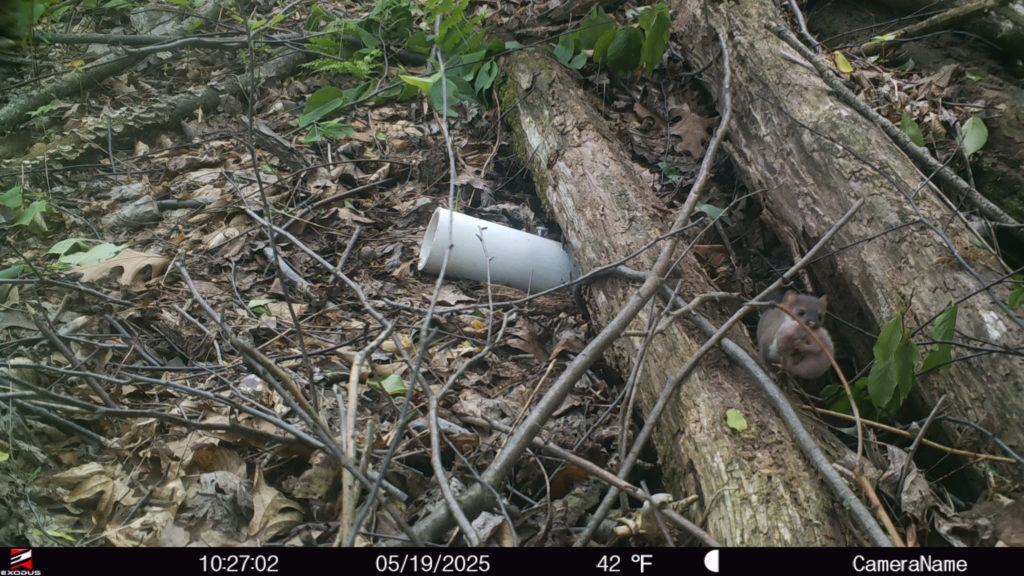
Weasel carrying its young. Photo by Kate Ebel, Wildlands Conservancy’s senior restoration ecologist
1: The least weasel is the world’s smallest carnivore.
Least weasels are 6 to 8.5 inches long including a 1.5-inch tail and weigh 1 to 2 ounces, making them the smallest type of weasel. In the middle, the short-tailed weasel will grow up to 12 inches long with a four-inch tail and weigh up to 1.6 to 3.7 ounces. The largest weasel is the long-tailed weasel, which grows up to 18″ long with an impressive five-to-six-inch tail and weighs up to 2.5-9.3 oz.
2: They have whiskers on their elbows.
Weasels’ elongated bodies allow them to enter rodent tunnels and small spaces, and they have highly sensitive whiskers on their elbows help them navigate. Talk about rubbing elbows! Humans got nuthin’ on weasels!
3: Weasels nest in rock/wood piles, hollows, and existing burrows.
As nocturnal animals, weasels sleep during the day and are active at night. Stonewalls, remnants of local farming history, are a favorite hideout spot for weasels.
4: Weasels have a fast metabolism.
With a heart that beats twice as fast as other mammals, weasels must eat more food to sustain their body weight. They generally eat approximately 40% of their body weight in food per day, and they cache their food for this reason.
5: Their bad reputation is undeserved.
What does the word ‘weasel’ bring up for you? The phrases “to weasel out of something,” “pop goes the weasel,” and calling someone a weasel all stem from these misunderstood mammals’ bad reputation. They are neither aggressive nor violent, and their negative connotation in language is a reflection of how cultures and people have treated these animals historically.



•Common negative connotation in our culture, from advertising to cartoon villians
6: The black tips on their tails help weasels escape predators.
Their black-tipped tail confuses predators and protects them from raptors like hawks and owls.
7: Weasels hunt through interpretative dance.
This behavior has been coined a “war dance,” and weasels use it to disorient their prey.
FOR KIDS: We recommend ending the video at 1:30 if you have kiddos watching.
8: Weasels are in the subfamily Mustelidae.
They are in the same subfamily as ferret and mink.
9: Weasels are mostly solitary creatures outside of mating season.
A group of weasels may be referred to as a “boogle,” “confusion,” “gang,” or “pack.”
10: Weasels live in many ecosystems.
Weasels are known to inhabit young forests (defined by short, twiggy vegetation) as well as grasslands and streamside corridors.
11: Weasels turn white in the winter.
As the cold winter sets in, many weasels shed their brown summer ‘pelage’ (fur or hair of a mammal) in exchange for developing a winter coat that is pure white to camouflage with the snow.
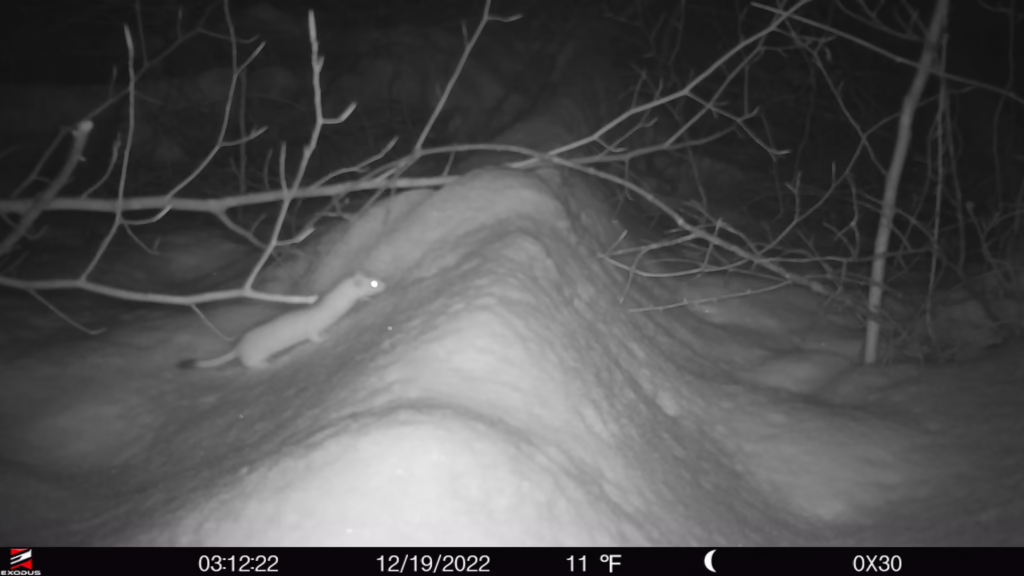
A weasel with a white, winter coat in the snow. Photo by Kate Ebel
12: Weasels are mesopredators.
A mesopredator is a carnivore or omnivore that occupies a mid-ranking in a food web, typically preying on smaller animals that are lower-level consumers. Weasels prey on small rodents but have been rarely seen predating on animals as large as rabbits.
13: The least weasel is a small mammal with one of the largest bite forces pound-for-pound compared to any other mammal.
The only mammal in the world with a stronger bite force is the Tasmanian devil.
14: Weasels evolved about 29–30 million years ago.
Weasels separated from their closest relatives (like procyonids) about 29–30 million years ago during the Cenozoic Era, also known as the “Age of Mammals.”
15: Current population data for weasels is understudied, but research suggests their population is declining.
These small mammals play a huge role in their niche and the ecosystem at large, being mesopredators, but their elusive nature makes them difficult for conservationists to protect. Weasels are sensitive to overall ecosystem health and respond quickly to changing environments. The first step to protecting the weasel populations is better understanding their distribution, habitat needs, and ecology.
See what steps Wildlands Conservancy is taking to study these critical creatures.

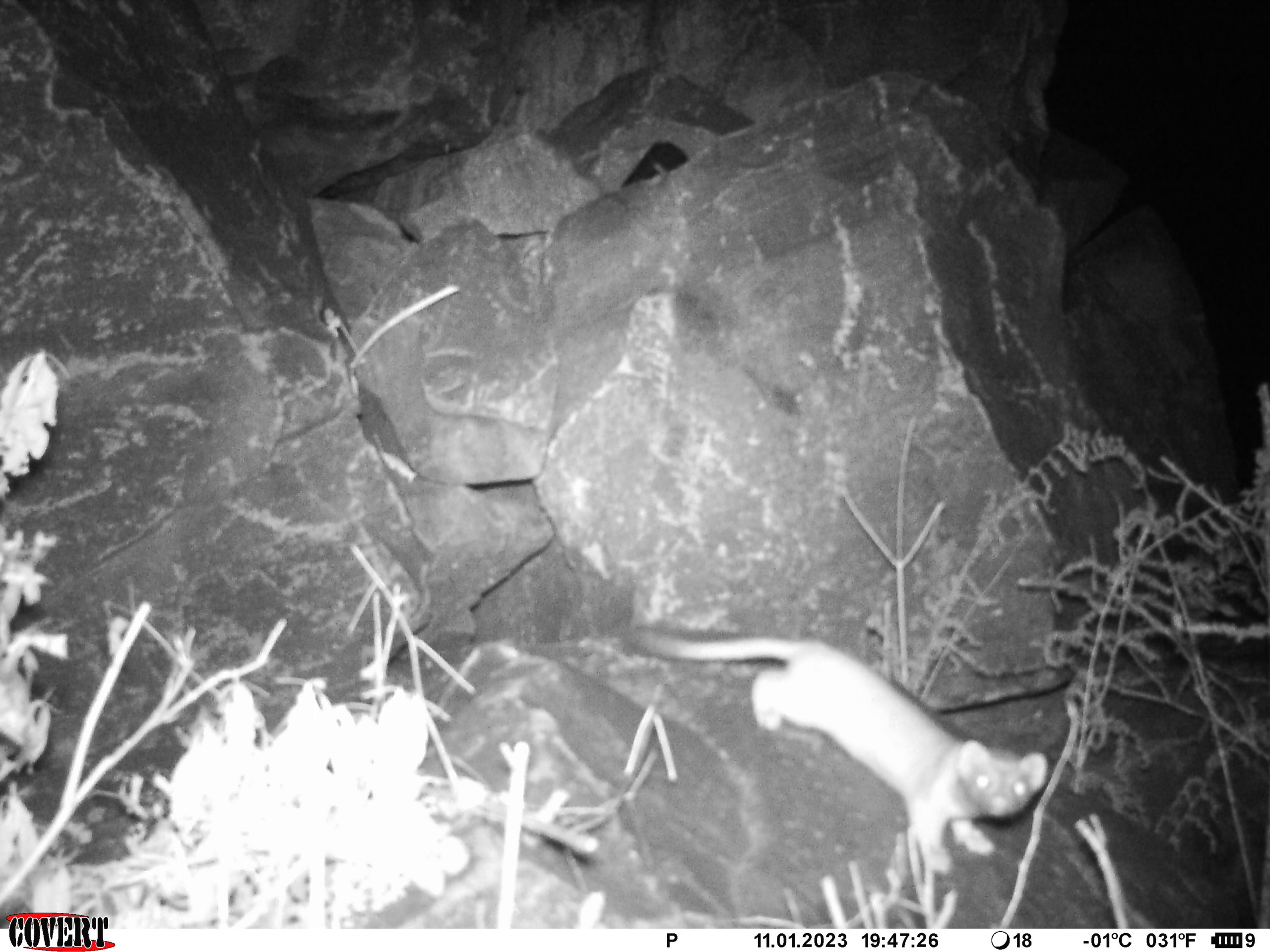
Photos by Kate Ebel
Wildlands Conservancy is Studying Weasel and Small Mammal Habitat
Wildlands Conservancy is beginning a three-year study to document small mammal populations and habitat in the Lehigh Valley and Lehigh River watershed. These animals are quick and elusive — rarely seen, and out of sight, out of mind for most people. But Kate Ebel, Wildlands’ senior restoration ecologist, has wildlife photography down to a science. She holds a Master of Science in Wildlife Biology and Conservation from Edinburgh Napier University and has a big heart for small mammals.

Since 2022, Wildlands has been surveying weasel species and testing detection methods like baits and trail cameras. Ebel’s cameras captured all the images on this webpage, as well as hundreds more.
The study will expand the effort to survey various locations for a broader scope of small mammal diversity, especially seeking those identified as Species of Greatest Conservation Need (SGCN) by the Pennsylvania Wildlife Action Plan.
“At any one time, there will be 30 cameras operating in arrays of three to allow for testing different methods for attracting small mammals to cameras,” says Ebel.
The cameras will be set up at local protected lands, including state game lands, county and municipal lands, as well as Wildlands Conservancy’s nature preserves and easements.
The forested landscapes in the Poconos and rocky terrain along the Kittatinny Ridge make up the vast majority of small mammal habitat in terms of acreage. The contrasting developed Lehigh Valley’s green spaces and wildlife corridors still have a huge significance for these small mammals.
“Wildlands has been working in this region for more than 50 years to protect open space and clean water for the benefit of both people and nature,” she says. “Our partnerships across many municipalities connect us with opportunities to survey natural lands, and our findings can be leveraged to help inform habitat restoration efforts for these critical small mammal species.”
The findings from this study can be used to more accurately represent small mammals in the next Wildlife Action Plan, which provides the framework to secure resources to protect natural resources for future generations.
Wildlands Conservancy acknowledges the support of its giving community, especially the Pennsylvania Department of Natural Resources and the Pennsylvania Game Commission, for making on-the-ground conservation science like this possible.
People like YOU make habitat conservation like this possible! GIVE TODAY!
Stay up to date with what’s happening out here at Wildlands Conservancy! Get stories like this in your inbox by joining our newsletter.
JOIN OUR NEWSLETTER
PRESS COVERAGE
4/5/2026
Lehigh Valley Small Mammal
Study
Lehigh Valley Live | Mark Demko
Animals such as white-tailed deer, black bear and red foxes are common and often spotted inhabitants of the Lehigh Valley. But the region is also home to a number of smaller mammals that residents rarely, if ever, see…
RELATED POSTS
-
Wildlands Conservancy brings prescribed fire back to Maple Tract PreserveBy Molly Bilinski maple tract For the first time in nearly a century, Wildlands Conservancy has brought fire back to Maple Tract Preserve. Wildlands last fall held a prescribed burn on a little over 30-acre portion of the remnant mesic till barrens, an ultra-rare ecosystem within the preserve that’s home to several species of trees […]
-
New Species Discovery at South Mountain Preserve: Will Yaeger’s Leucoagaricus Fungal FindYou never know what fascinating fungi you’ll find at Wildlands Conservancy’s 14 nature preserves, whether it’s a first for science or a first for your very own eyes. Just ask Lehigh University alum, ’24, Will Yaeger. His little-white-mushroom find turned out to be a big discovery. Last August, during one of his regular outings at South Mountain Preserve, Yaeger, a mycology enthusiast […]