The Ultimate Guide for Valentine’s Lovebirds: What These 7 Pennsylvania Birds Will Tell You about Your Love Life
So, you want to know if your tweetheart is into you, too? If you want a little birdie to tell you, fly right this way! Select your favorite feathered friend to see what it says (or chirps) about your love life.
And if you need a birding Valentine’s Day eCard for the dove of your life, we’ve got you covered (or hovered)!
1: Pileated Woodpecker
If your favorite bird is a pileated woodpecker, you value your partner for their communication and humor. Comedy is important to you, and you love to laugh out loud! Pileated woodpeckers love telling knock-knock jokes. Not metaphorically. They drum on wood for food. And, being some of the loudest birds in the forest, their far-carrying calls sound like a laughing “wuk-wuk-wuk.”
All jokes aside, your love for woodpeckers symbolizes homelife. Woodpeckers are not only known for their big voices, but also for building extravagant nests. Whole branches can be excavated and hammered away to build their houses. They mate for life and work together to protect their homes.
And not to mention, have you seen that fabulous head of red feathers?
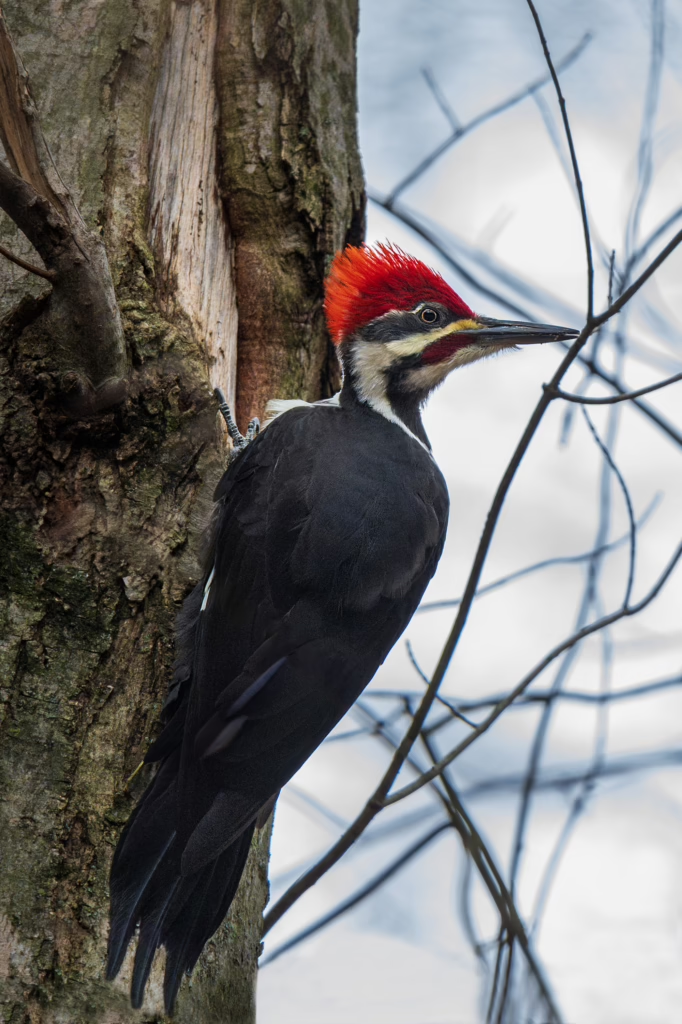
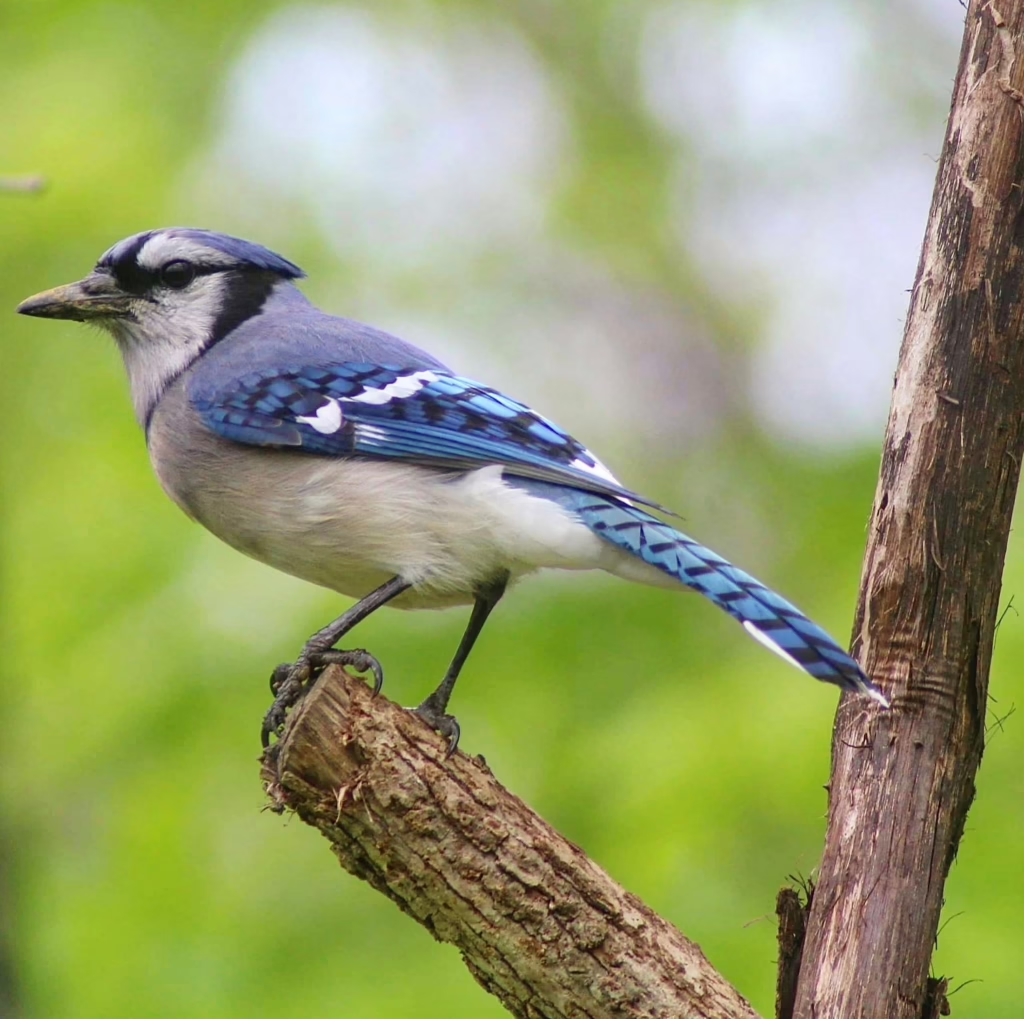
From left: PIleated woodpecker by Steve Miller, blue jay by Jessica Towey
2: Blue Jay
If you favor the blue jay as your pick of Valentine’s lovebird, you should be with an environmental steward. Blue jays plant trees — like, a lot of trees! These treeriffic foragers adore acorns and will stockpile as many as they can find each year — up to an estimated 5,000 acorns per bird in a single season.
The birds bury the nuts up to 2.5 miles away from the source tree that dropped them, but remembering where all 5,000 have been hidden is no easy task. Despite blue jays being incredibly smart, they can only remember about 25% of their acorn whereabouts. The rest are left to germinate, sprout, and seed entire forests. They’re such enthusiastic environmentalists that they reforest by accident. As far as we know, the spread of oak forests in Pennsylvania after the glaciers receded might be because of blue jays’ northward expansion.
So find yourself a native plant gardener and ask them about what lepidoptera (moths & butterflies) they’re supporting.
3: Canada Goose
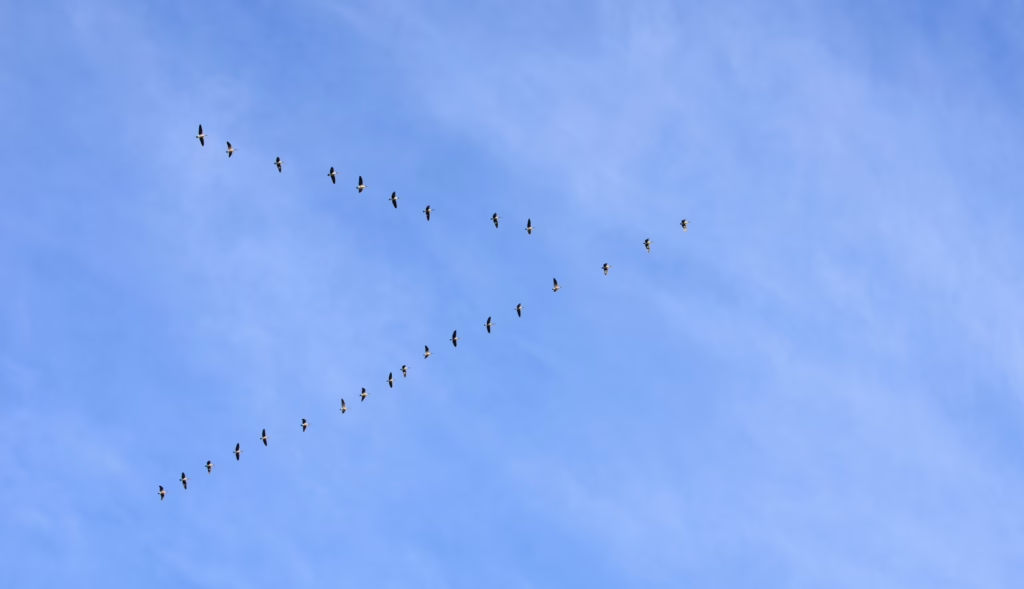
If you picked the Canada goose, you will be with someone who is a capital “V” VERY good listener. When a flock of Canada geese flies overhead in that V formation, all we hear is “HONK HONK.” But Canada geese actually pick up on subtle frequencies and rhythmic patterns to identify their mate, even in a massive flock. They even use these subtle cues to pick up on their partner’s tone, like when a goose girlfriend is like “I’m fine,” in a totally not fine tone.
If they can’t pick up on your sarcasm, they’re not your goose.
4: Goldfinch
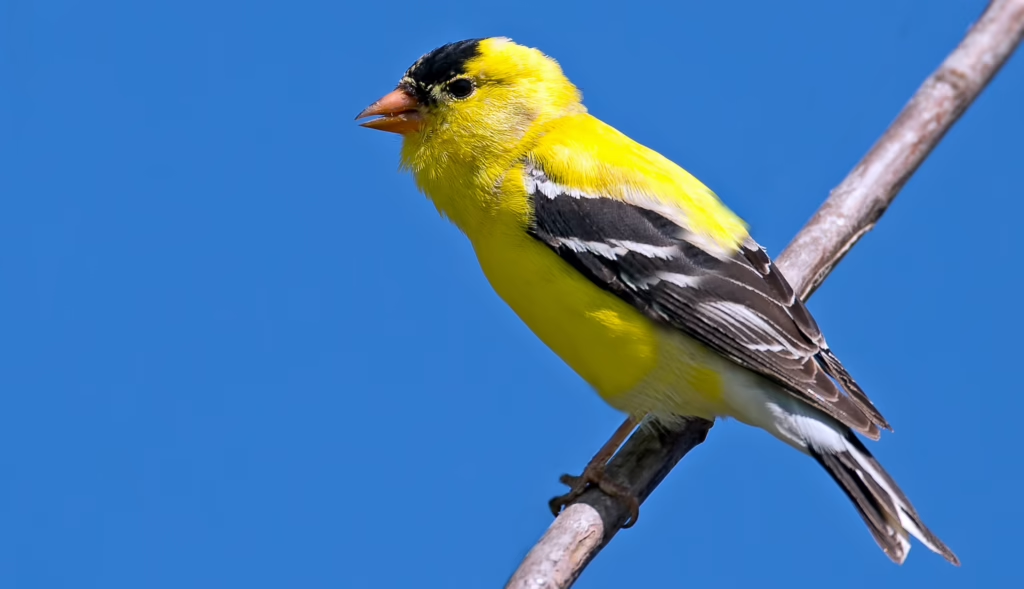
If you’re going for gold, you and your partner might both be type As. You’re not “winging it.” when it comes to living your most healthy and whole lives. Yours is a partnership where you motivate one another on your self-improvement/self-care/health and wellness journeys.
Goldfinches are vegetarian birds, so they have no problem getting a healthy dose of fiber daily. And they are the only North American finch species that molt twice per year to show up as their best selves for migration and mating season. They’re so fabulous, their flocks are even called charms — we’re charmed!
And we’re sure you will be, too, when you fly off into the golden-goldfinch sunset with someone who supports your every success.
5: Mallards
If you picked the mallard, you are looking for a partner who will woo you. A true romantic. During the mallards’ courtship, they perform dances to flirt with their mates.
Mallards even “shower” their Valentine by splashing water on them in these synchronized swim dances — talk about getting “showered with presents!”
Mallards are also common in cities as well as suburban-to-urban parks. So go on that date to the park!
6: Nuthatch
If your favorite bird on this list is a nuthatch, you need another birder to match your energy. Nuthatches are highly intelligent birds that display high cognitive behavior (despite their bird brains) like using tools and speaking other languages.
Yes, nuthatches use pieces of bark as tools to pry at trees in search of insects. And they’ve been known to respond to the threat calls of other species. Nuthatches, like birders, are bird whisperers, too, identifying birds based solely on their calls.
You deserve a partner who cares more about your species count than any other number.
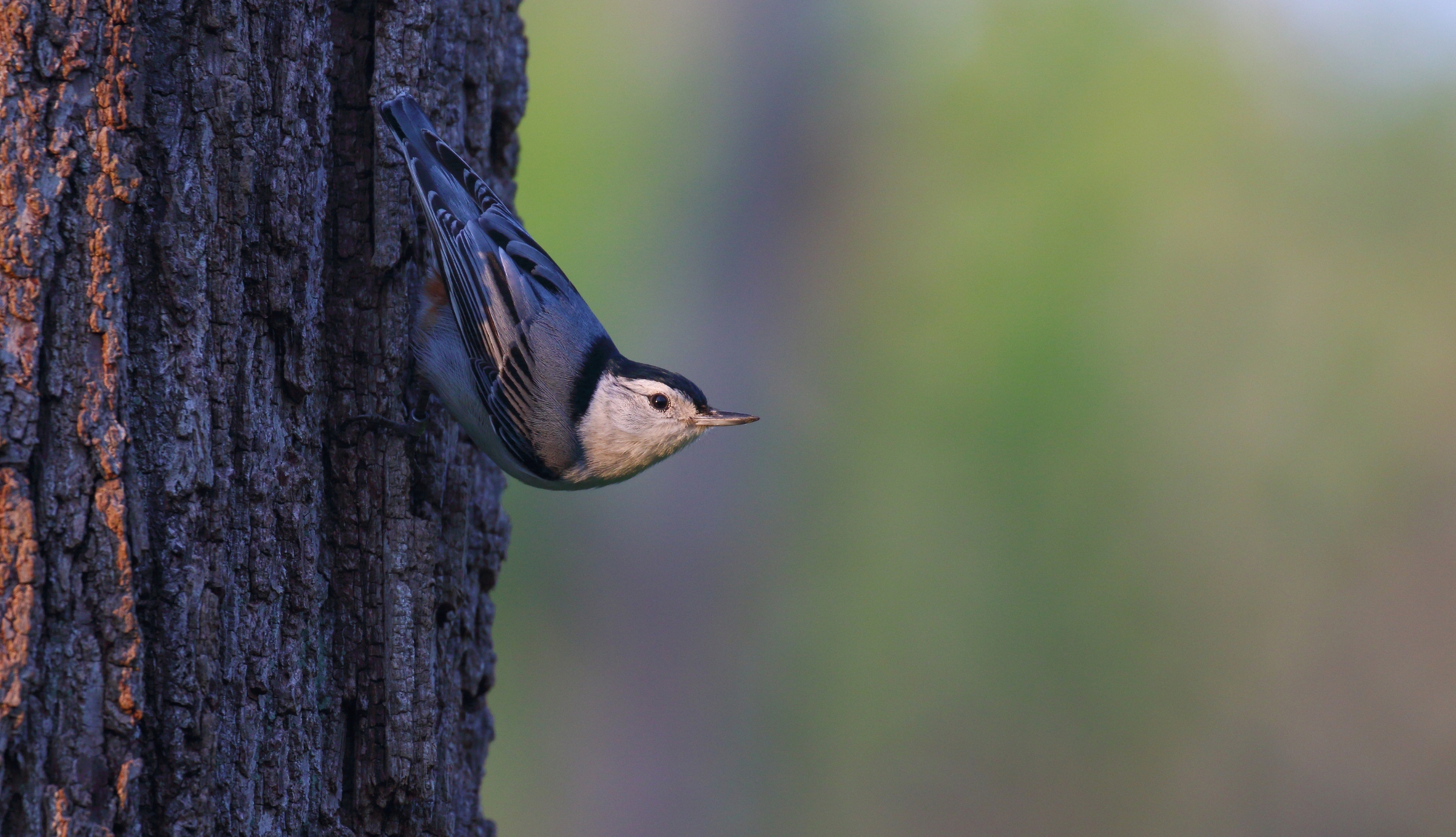
Nuthatch by Himanushu Gupta
7: Barn Owl
If your favorite birds are owls, you wear your heart on your sleeve, just like the barn owl. Barn owls have been dubbed the “sweetheart owl” or “Valentine owl” due to their appearance. Do you see the heart shape on their face? The distinct design of this flat, heart-shaped facial disk helps draw sound back to their ears. It makes them so good at hearing — and so cute.
Your admirer has more than just heart eyes for you, and they’re sending you owl their love.
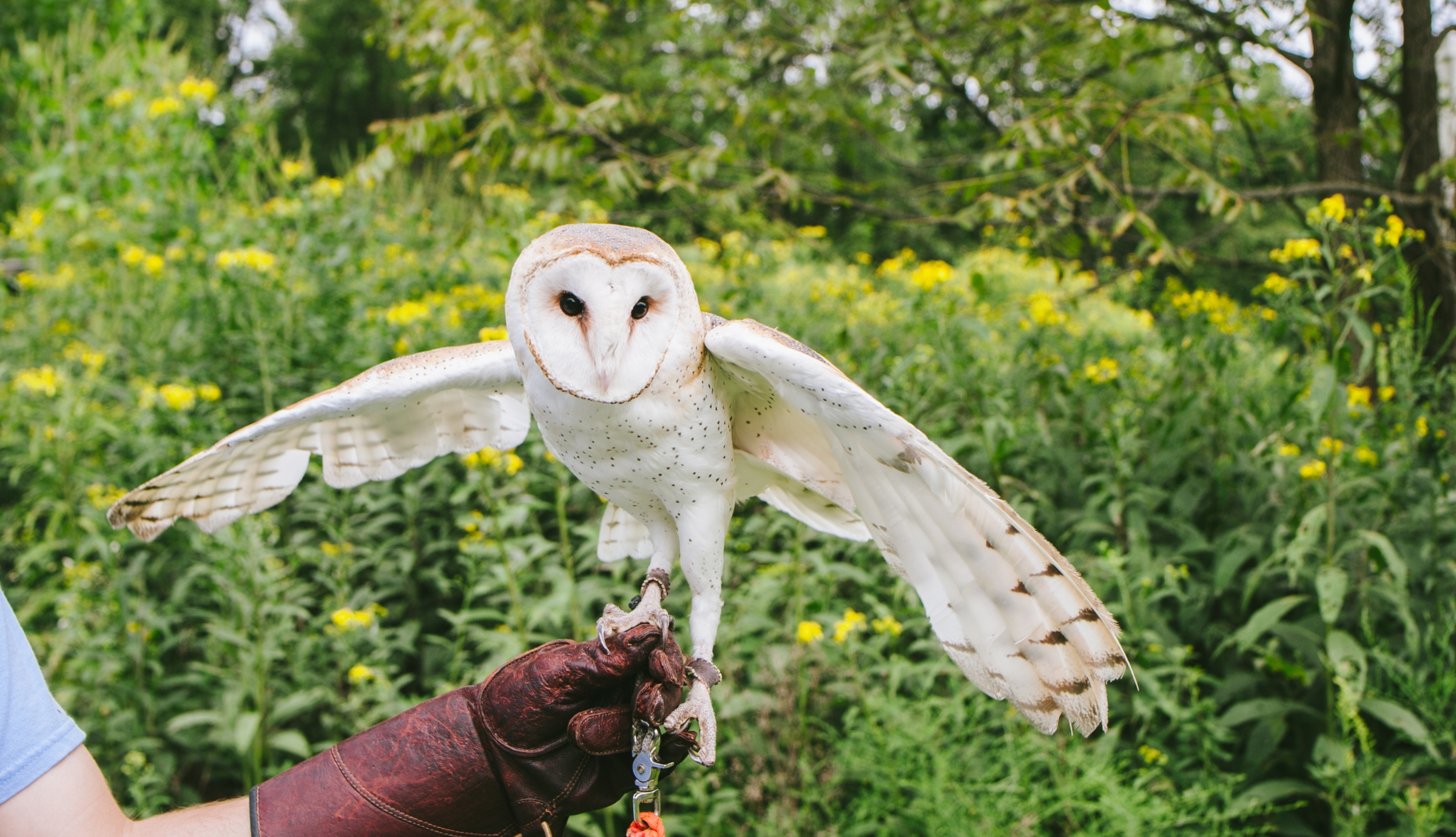
Staff animal ambassador barn owl at Wildlands Conservancy
You’re ROBIN my heart.
We’re stuck together like vel-CROW.
There’s more where these came from…
…Because your FREE Valentine’s Day eCards are a few clicks away.
Get your free, downloadable eCards by entering your email.
Stay in-the-know about upcoming outdoor adventures, and hear the latest happenings about the nature in your neck of the woods. Entry signs you up to receive email newsletters from Wildlands Conservancy.
GET YOUR VALENTINE’S ECARD
RELATED POSTS
-
7 Showy Pennsylvania Trees You Must See this Spring!By: Andrew Conboy trees The face-numbing winds, scarce daylight, and dormant vegetation of winter invite us to slow down, reflect, and relax. I do enjoy the first month or two of this slow season. But come early March, I long for the procession of rejuvenating blooms, fragrances, and flushes of green, delicate growth. Did the […]
-
The Ultimate Guide for Valentine’s Lovebirds: What These 7 Pennsylvania Birds Will Tell You about Your Love LifeSo, you want to know if your tweetheart is into you, too? If you want a little birdie to tell you, fly right this way! Select your favorite feathered friend to see what it says (or chirps) about your love life. And if you need a birding Valentine’s Day eCard for the dove of your […]