Need Help Identifying Plants, Birds, Fungi, or Fauna? iNaturalist. It’s the App for That! Community Science
Have you ever stopped to look at nature… a little too close? Did you find yourself asking, “What is this thing?” What do you call that marvelous, little wildflower? What is that neat, yellow bird? Well, your curiosity for identifying earns you a spot in the coolest club for community scientists. And we’re on the app, iNaturalist.
What’s community science? What’s iNaturalist?
Community science is participatory research that makes contributing to science accessible with little training. Simply by snapping a picture and making an observation on the iNaturalist app, you learn about nature near you while helping researchers collect vital data on everything from invasive species management to the migratory patterns of birds. Even if you’re not quite sure about what exactly you’ve found, you can connect with enthusiasts on the app for a second opinion.
This craze of participating in community science is growing fast—because you never know what you might find. An iNaturalist user spotted a humpback whale in New York’s East River! And other iNaturalist observations have been shining a light on species thought to be extinct, such as this “lost” marine worm researchers saw after 68 years, when it was spotted photobombing seahorses.
Curious about community science at our nature preserves?
Wildlands Conservancy’s 14 nature preserves are out here, ready for your outdoor adventures. Read on to explore what others have been observing and identifying near you! And find our project on the app (Apple Store or Google Play) or at iNaturalist.org.
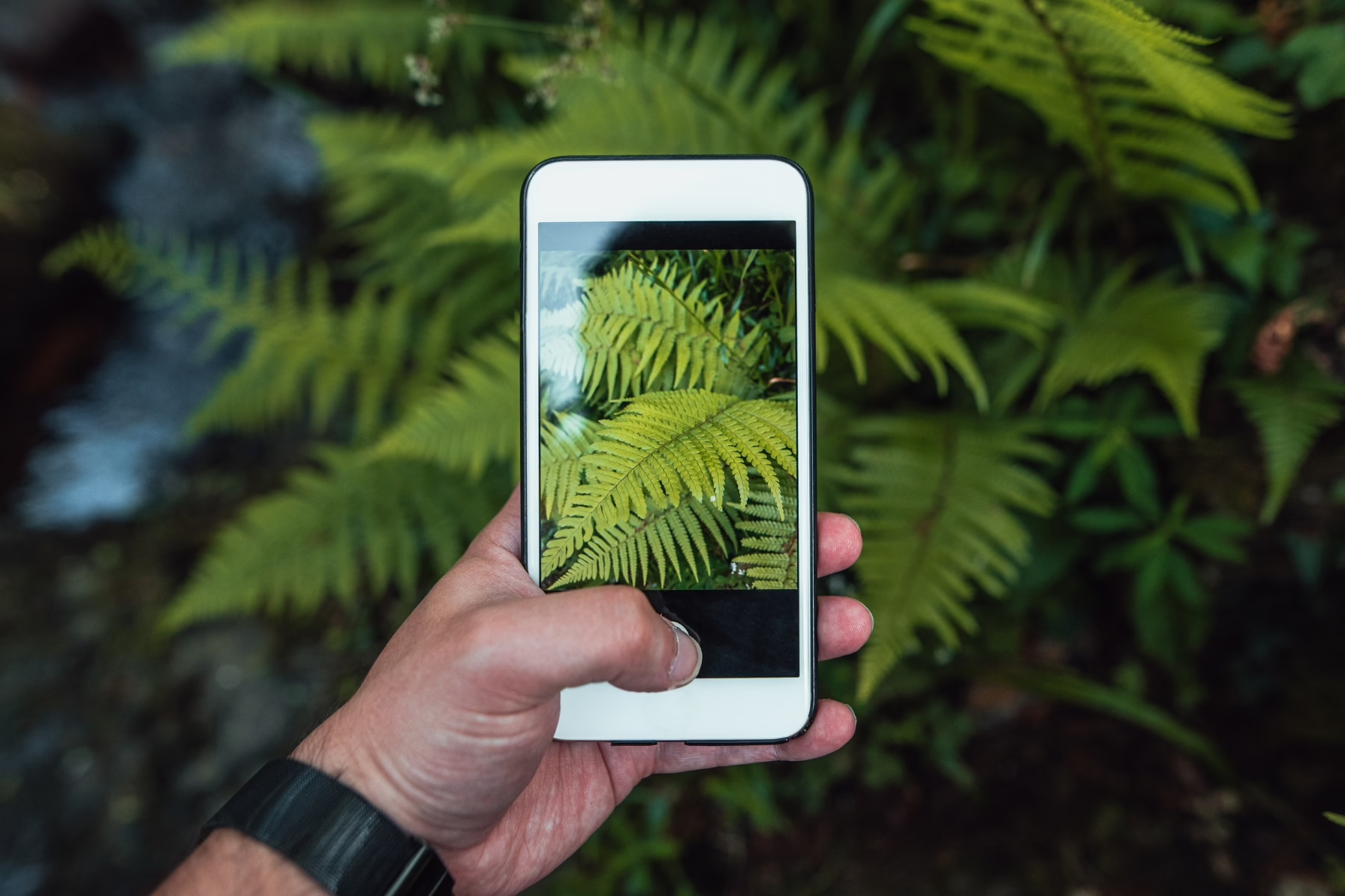
What is this WILD plant or animal out here?
Unlike other community science apps like eBird that specialize in identifying birds, iNaturalist deals with anything biotic that is or once was living: birds, amphibians, reptiles, mammals, fish, mollusks, arachnids, insects, plants, protozoans, fungi, and lichen. As of March 2026, there is a total of 289,677,00+ observations made by more than 4 million iNaturalist users worldwide.
At Wildlands Conservancy’s nature preserves alone, 2,700+ observations (and counting) of 929 species have been made by 300 iNaturalist users. Of those, more than half are “Research Grade,” meaning their identification has been confirmed by others and these observations can be used in scientific datasets as well as academic research.
Here, you can find a dashboard of iNaturalist observations below. To hone in on a Wildlands Conservancy nature preserve, select the preserve you want to explore. Then, you can select a species to see its observation and view more information about the species.
Getting Started: Identify your nature finds and contribute to community science!
The mobile app (Apple Store or Google Play) is best for making and uploading observations. If you want the full experience, the desktop website allows you to suggest identifications on others’ observations and even make your own project like the one above.
One thing to note when getting started: iNaturalist will make you view the world differently. You might see more nature in urban environments, develop a keen eye, and be encouraged to take up the hobby of lifelong learning. iNaturalist Executive Director Scott Loarie talked about why community science is so important for inspiring conservation during a TEDtalk titled The Surprising Power of Your Nature Photos.
“Taking photographs, noticing starfish and plants, it doesn’t just change what we know about the natural world. It changes us. Because each one of these photographs and observations is this very personal act of curiosity, action, and participation. It changes our relationship with nature. It doesn’t just help science; It helps us care about the nature that’s in our lives. I think that’s the most important tool for conservation out of all of this.”
Scott Loarie
Executive Director, iNaturalist
Make an Observation
To get started making iNaturalist observations, you’ll need to create an account or login. You’ll need a set amount of information for create a high-quality observation:
- A photo or a sound recording.
- Where you saw the organism. This can be either manually or automatically imported, or you have the option to obscure the location.
- When (date/time) you observed the organism. This usually automatically uploads from a photo’s metadata, but you’ll want to double-check that it’s correct.
- An identification. iNaturalist’s AI will offer suggestions, but if you’re not so sure, type in the family group, order, or taxon. It can be better to go with a broad identification like “bird” or “fungi” rather than guess what something is.
- If it was cultivated like a house or garden plant, zoo animal, or pet, ensure you click the captive/cultivated checkbox.
You can follow iNaturalist’s step-by-step guide to creating an observation or watch a video tutorial.
Join A Project that Fits Your Interests
Projects allow users to sort data by criteria, including taxonomic subject matter, time of year, and/or location.
- City Nature Challenge 2026: Lehigh Valley – The City Nature Challenge is an annual, worldwide bioblitz (an event to record as many species as possible in a short period of time). The challenge runs April 24-27 and is open to everyone to participate, regardless of prior training—just click “Join project.” But you can prepare to take on the challenge with training sessions at Dan’s Camera City. Learn hands-on how to use iNaturalist and pick up some photography pointers from the experts! Sessions are: Friday, March 20, and Saturday, March 21, at Dan’s Camera City, Saturday, April 4 at the Bethlehem Area Public Library, Monday, April 6 at the Parkland Community Library.
- Wildlands Conservancy’s Nature Preserves – Search and sift through your favorite Wildlands Conservancy’s nature preserves individually. South Mountain Preserve, Black River Sanctuary, and many, many more have their own iNaturalist project that automatically catches your observations made at the respective location.
- Spotted Lantern Fly Predation – The Spotted Lantern Fly (SLF) Predation project documents photo evidence of native or introduced species eating or parasitizing the spotted lantern fly in North America. This data is being used in research at Penn State about native birds’ impact on spotted lantern flies.
- Found Feathers – When you pick up a cool feather you find on the ground, you’re picking up a puzzle piece that’s a part of broader bird population and migration data. Your feather photos might readily be identified by iNaturalist’s technology while creating an observation, but adding the observation to the Found Feathers project increases the chances it makes it in front a real human birder’s eyes for another opinion.
- Northeast Rare Fungi Challenge – Fungal Diversity Survey targets 20 potentially rare or under-documented species of mushrooms in this project. Just click “Join Project,” and if you ever stumble upon one of the rare species, it will automatically show up in the project. Keep your eye out for a volunteer reaching out about obtaining a specimen for DNA sequencing.
RELATED POSTS
-
New Species Discovery at South Mountain Preserve: Will Yaeger’s Leucoagaricus Fungal FindYou never know what fascinating fungi you’ll find at Wildlands Conservancy’s 14 nature preserves, whether it’s a first for science or a first for your very own eyes. Just ask Lehigh University alum, ’24, Will Yaeger. His little-white-mushroom find turned out to be a big discovery. Last August, during one of his regular outings at South Mountain Preserve, Yaeger, a mycology enthusiast […]
-
7 Showy Pennsylvania Trees You Must See this Spring!By: Andrew Conboy trees The face-numbing winds, scarce daylight, and dormant vegetation of winter invite us to slow down, reflect, and relax. I do enjoy the first month or two of this slow season. But come early March, I long for the procession of rejuvenating blooms, fragrances, and flushes of green, delicate growth. Did the […]
WE’RE IN THE FOREVER BUSINESS.
It takes a community of support to care for and maintain Wildlands Conservancy’s 14 nature preserves in the Lehigh Valley and Lehigh River watershed.
That’s where you come in! Your donation today, in any amount, helps us save these special places for you and for future generations—forever.