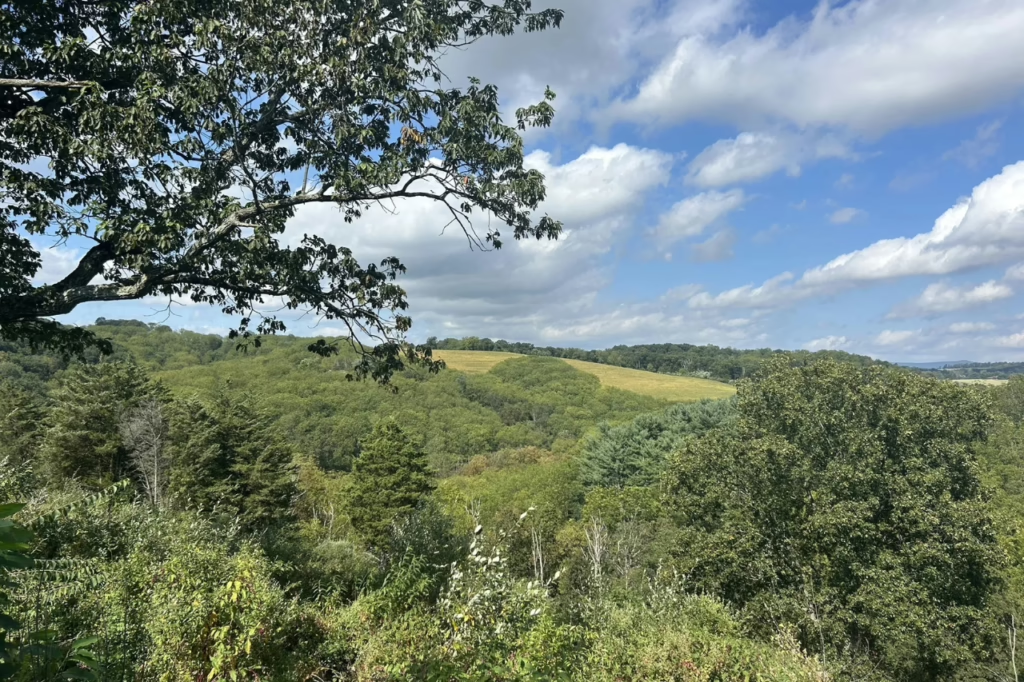
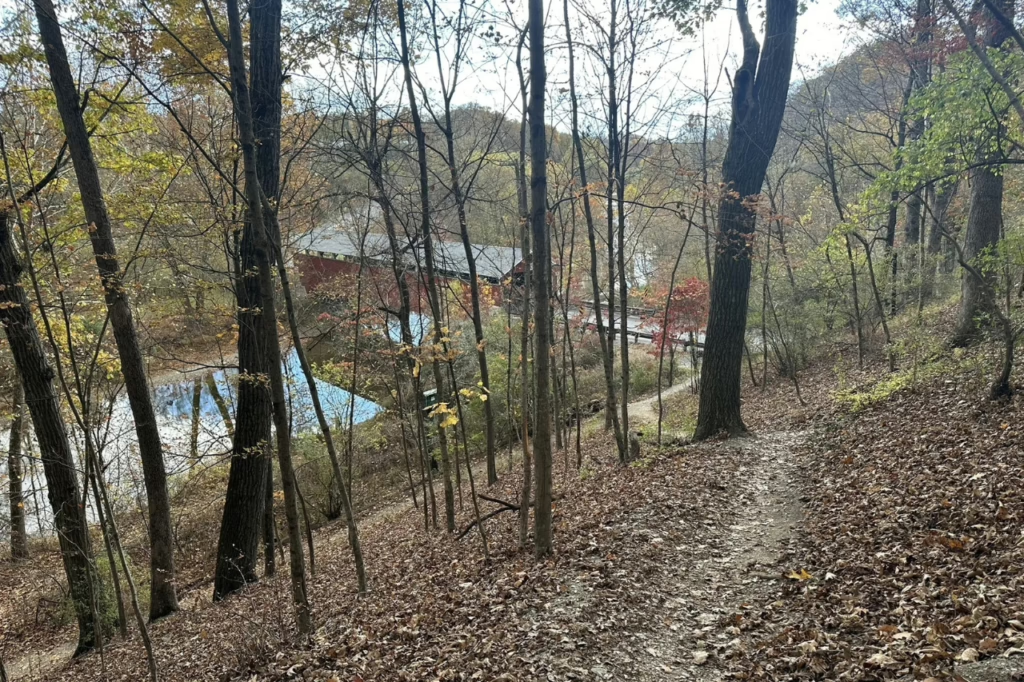
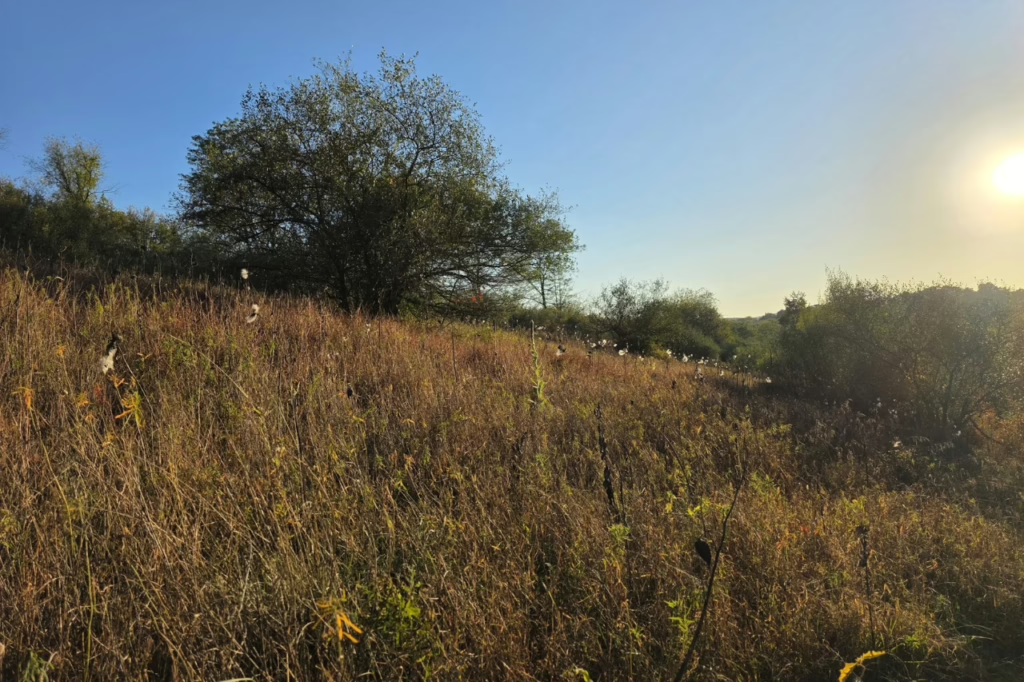


The County of Lehigh’s 1,108-acre Trexler Nature Preserve is a local destination for tens-of-thousands of visitors each year including families, hikers, bikers, and more. It features a diversity of landscapes, from meadows and hills to hemlocks and deep ravines. Trexler stands as the largest area of green space in the Lehigh Valley and is a focal point for land conservation, environmental stewardship and community education.
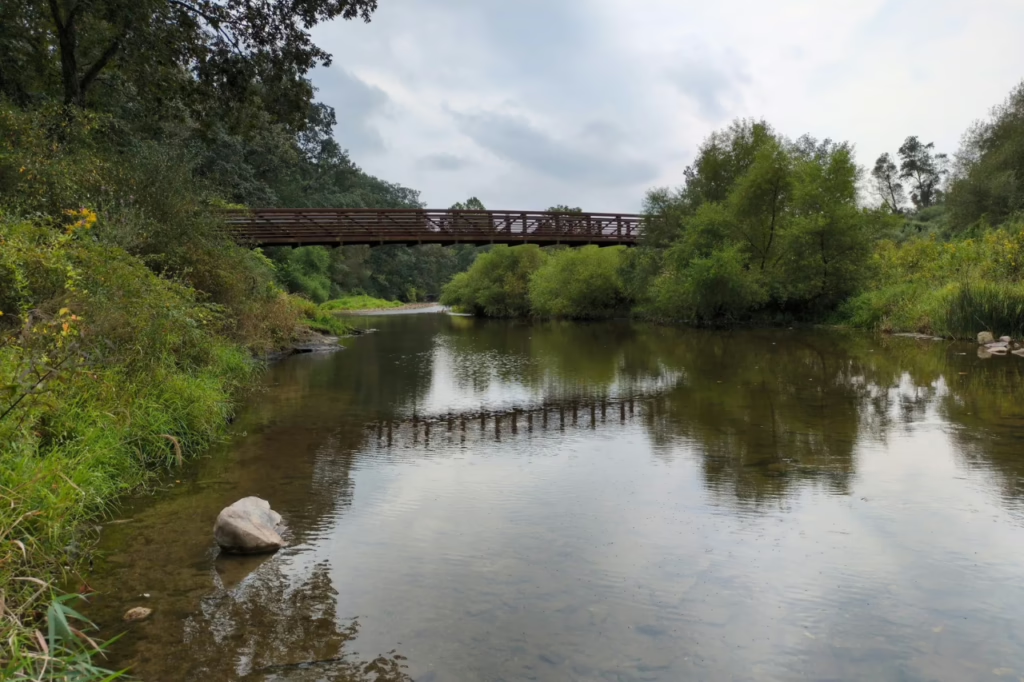
Trexler boasts over 18 miles of multi-use trails, including hiking, mountain biking, equestrian trails, plus an ADA-accessible Covered Bridge Trail that leads to the Jordan Creek. The signature Trexler Border Trail (red-blazed) spans approximately 8–9 miles and winds through rolling hills, from the Trexler Environmental Center down to Jordan Creek, crossing roads and offering panoramic valley views. Blazed loops—such as the Elk Viewing trail (double blue), Fireman’s Trail (white), Teardrop (green), and Hunsicker Valley (yellow)—connect through meadows, woods, and creek crossings.
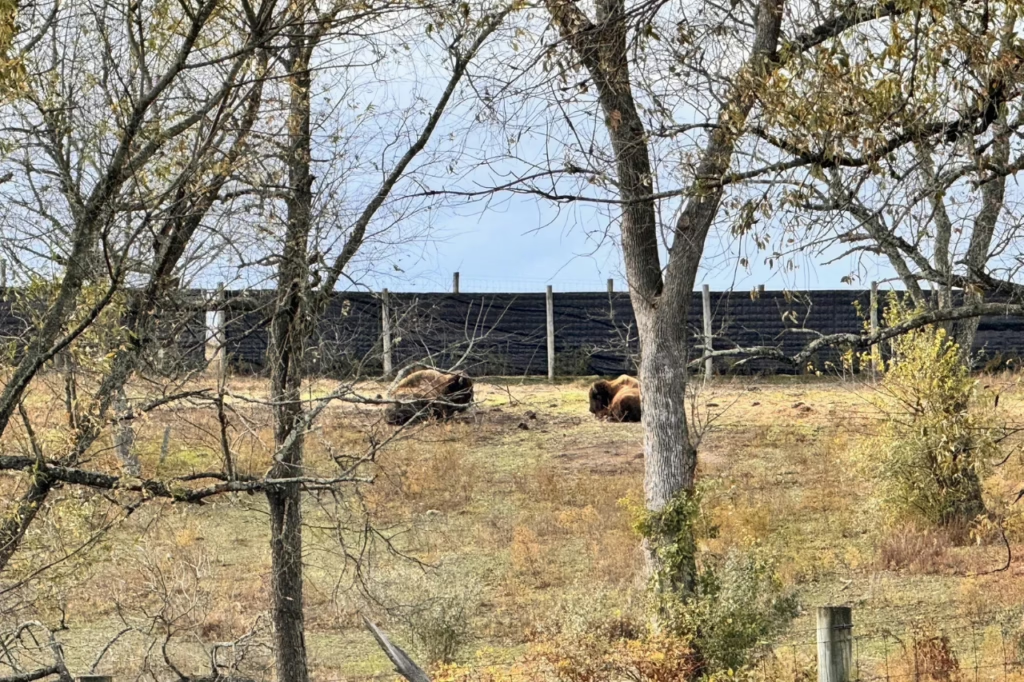
Trexler Nature Preserve was founded to support populations of plains bison, elk, and white-tailed deer. Today, these animals remain central attractions, grazing in open fields, visible from the trails. Bird watchers and hikers are also likely to see numerous meadow and forest bird species, amphibians, and small mammals. Jordan Creek supports trout stocking for fishing and is a natural wetland corridor. The creek acts as a magnet to attract local wildlife, and is a perfect place to visit if you want plenty of sightings.
The open meadows at Trexler are among the preserve’s defining features—sweeping fields of grasses and wildflowers that stretch across the hillsides and provide crucial habitat for pollinators, ground-nesting birds, and grazing wildlife. These grasslands are actively managed through mowing and habitat restoration efforts to promote native plant growth and to maintain the open conditions that make Trexler so visually striking. While the plant species here shift with the seasons and change subtly across the preserve, the waving grasses and bursts of goldenrod, milkweed, and asters paint a dynamic picture from spring through fall.
Originally purchased by General Harry C. Trexler to create a sanctuary for bison, elk, and deer, the preserve was later offered to the citizens of Lehigh County at the turn of the 20th Century through his will. Trexler invites us to understand our relationship with the natural world, our impact upon it, and the responsible use of its resources. Following decades as a restricted game preserve for much of the 20th century, including the opening of the Lehigh Valley Zoo in 1975, the site was legally opened to public recreational use in 2004. Numerous buildings and structures from the Trexler era remain, and the preserve is still managed in line with Trexler’s conservation-oriented philanthropy.
Wildlands Conservancy, the region’s nonprofit land trust since 1973, has been working in partnership with the County of Lehigh since 2004 to steward Trexler’s conservation value, guiding and implementing best practices for the protection and caretaking of the land, water and recreational resources. Key stewardship management areas and partnership opportunities include native grassland restoration, an American chestnut orchard, forestry test plots, and educating the next generation of environmental stewards in the Trexler Environmental Center.
Native Grassland Restoration – North Range
A great variety of birds, amphibians and insects depend upon native grasslands to survive, but across the country, grassland habitat has declined more rapidly than any other type of habitat. In the Lehigh Valley alone, less than 1,000 acres of grasslands remain and the majority of it is fragmented and lacking diversity. Trexler’s North Range, dominated by Autumn olive, an invasive plant species that was introduced to the United States early on in the 19th century from Asia, provides a special opportunity to eradicate this invasive while also restoring native grasslands. Autumn olive is being removed across 200 acres within the North Range. Plantings of native grasses and wildflowers will follow, establishing the grasslands needed for pollinators and wildlife to abound.
Jordan Creek Stream Health – Central & South Ranges
The health of the Jordan Creek is stewarded for the community’s safety and enjoyment, as well as fish and wildlife habitat, through the following stream and agricultural best management practices:
- Planting native trees, shrubs and grasses along the streambanks to filter polluted runoff, decrease erosion and provide food and shelter for birds, butterflies, small mammals and other wildlife
- Preventing local flooding through the restoration of the creek’s natural floodplain
- Improving water quality and fish and wildlife habitat by removing dams and installing natural in-stream structures like logs and rocks
- Relocating bison fencing to prevent agriculture-related pollution, decrease erosion and improve stream-life habitat
American Chestnut Orchard – Central Range
Historically, the American chestnut comprised 25% of eastern U.S. forest species. It was a critical food source for a wide variety of native birds and mammals, and it was a preferred source of lumber. However, a mid-20th century blight brought on by invasive, imported Asian chestnut trees nearly wiped out our American chestnut. In 2012, as part of an initiative of The American Chestnut Foundation to create blight-resistant hybrid trees that retain the main characteristics of the American species, a four-acre orchard was established in the Central Range with the hope of someday reintroducing the American chestnut to the wild.
Forestry Test Plots – Central Range
A healthy forest has an understory that is dense with a variety of native species and vegetation layers. It is an indicator of habitat diversity and the forest’s ability for regeneration. Trexler, like many of our local forests, lacks a developed understory and is unable to sustain itself. Two key factors contribute to Trexler’s degraded forests: 1. High prevalence of invasive plant species and 2. Overabundant deer populations.
Practical and effective strategies for forest regeneration are being pinpointed through six one-acre plots. The plots test different combinations of deer exclusion, invasive species control and selective timber harvest.
Trexler Environmental Center – Central Range
The Trexler Environmental Center is the Lehigh Valley’s first Leadership in Energy and Environmental Design (LEED) certified building. It features a vegetative roof with solar panels, recycled concrete cinder blocks and plumbing that takes advantage of rainwater. It houses a county park office, a satellite office for the State Bureau of Forestry and a community room for environmental education.
For More Information: